
The WhatsApp Comeback: How a Content Strategy Redefined Brazilian Politics — and Changed the Game in 2026
Some elections are decided in televised debates, through traditional party alliances, or by the financial power of campaigns. Brazil’s 2026 presidential election will go down in the history of digital media for a less conventional reason: it was turned around, in large part, by the organic mobilisation of millions of people with a phone in hand, coordinated through a constant flow of direct missions on WhatsApp broadcast channels.
At the end of the first round, the outlook looked unfavourable. Senator Flávio Bolsonaro (PL) led the race by roughly 2.2 million votes. Three weeks later, Luiz Inácio Lula da Silva was re-elected with 51.79% of valid votes and a margin of 4.43 million votes over his rival — a net swing of more than 6.6 million votes. It was the first time in Brazil’s democratic history that a presidential candidate reversed a first-round deficit.
For anyone working in communications, the lesson is clear: a well-orchestrated, authentic and decentralised content strategy can change the course of events.
“Lula’s Army” and Owned Media
The result confirms a premise often overlooked in digital marketing: content does not exist merely to build brand awareness. It exists to activate communities around a cause.
Lula’s campaign recognised that relying exclusively on traditional social feeds was a strategic risk. Instead, it built its own communications network through the “Exército do Lula” (“Lula’s Army”) WhatsApp channel, created and led by Congressman André Janones. The channel surpassed 10.8 million subscribers and operated as a digital headquarters: distributing videos, memes, talking points, hashtags and concrete mobilisation tasks.
This machine was not the work of one person. It was powered by a new generation of Brazilian left-wing leaders — including Erika Hilton, Sâmia Bomfim, Ana Elisa and Guilherme Cortez — lawmakers who entered politics already fluent in vertical video, direct language, youth culture, social movements and Brazil’s artistic community.
Erika Hilton, re-elected with 1.59 million votes, Sâmia Bomfim and Ana Elisa took part in the meetings that shaped the campaign’s digital task force, alongside figures such as Jones Manoel, Pedro Rousseff, Fábio Félix and Ana Júlia Ribeiro. The goal was not simply to produce content; it was to turn supporters into creators, curators and distributors.
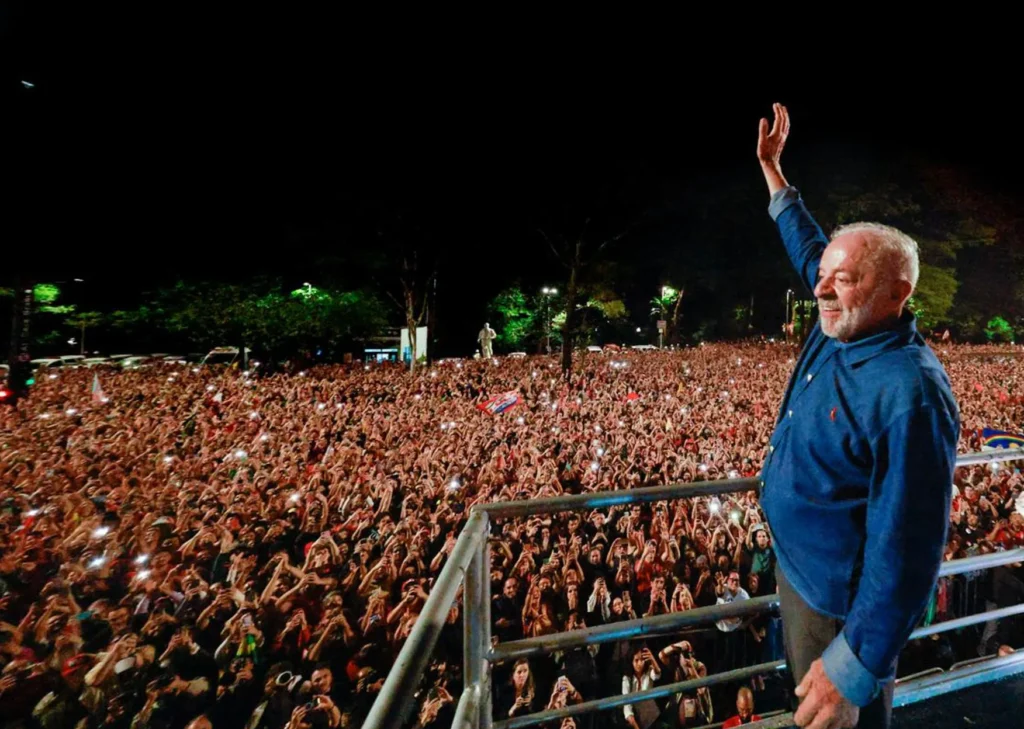
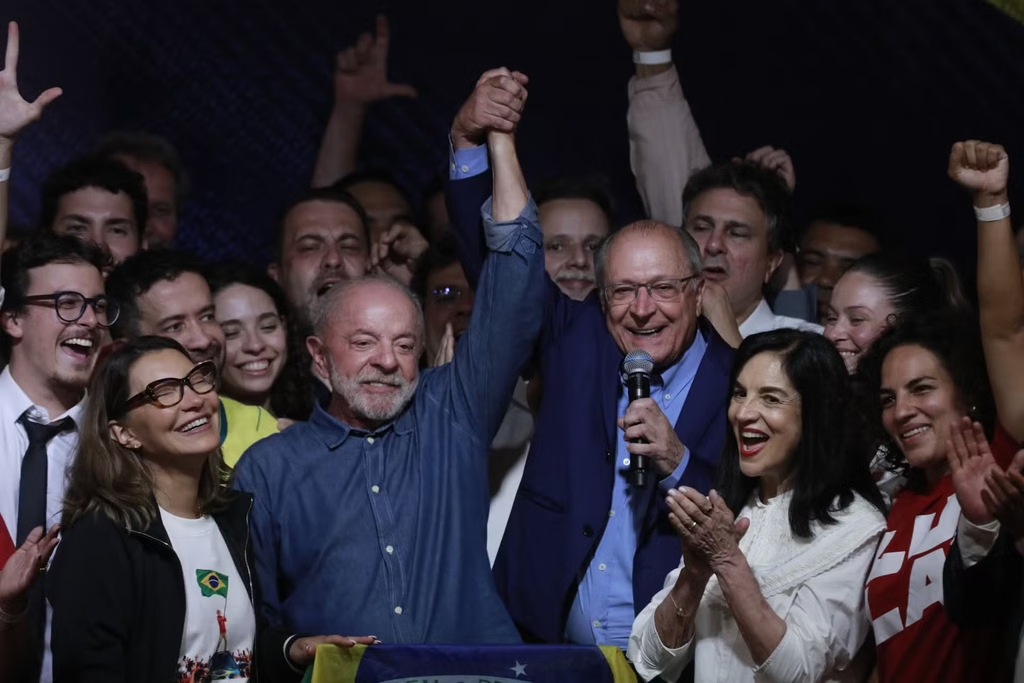
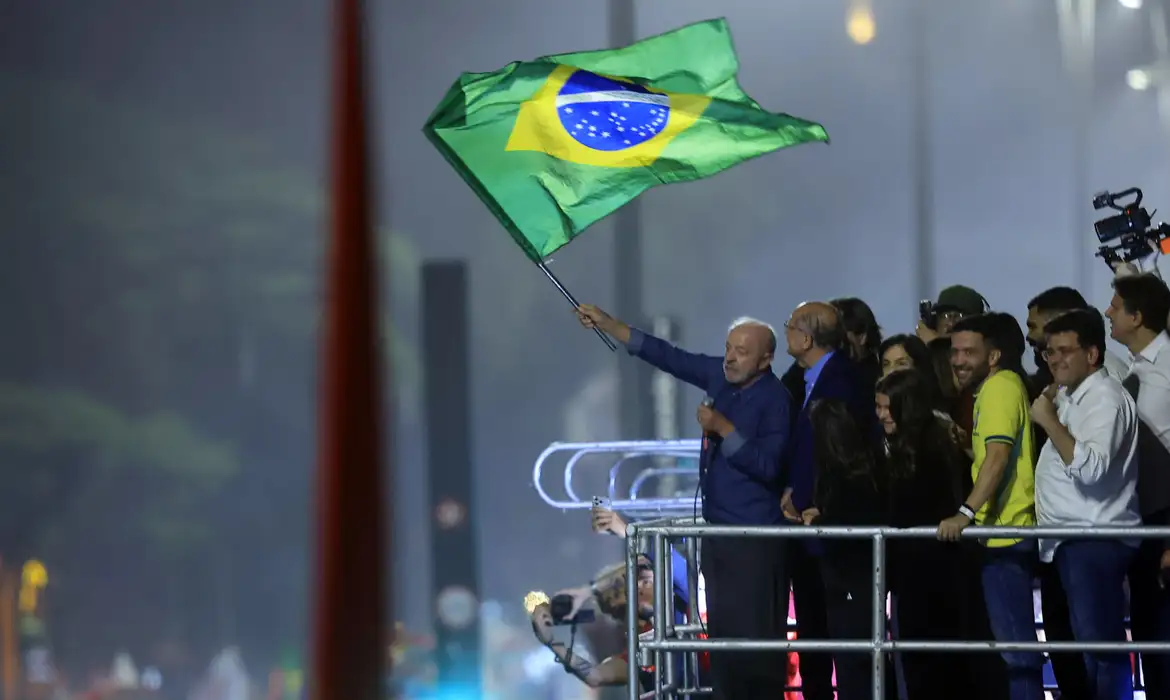
The mobilisation also gained breadth through Brazil’s broader democratic coalition. At Lula’s final campaign rally on São Paulo’s Avenida Paulista, he was joined by Vice-President Geraldo Alckmin, Guilherme Boulos, Fernando Haddad, Marina Silva and Simone Tebet — a sign that the comeback combined digital energy, political coordination and street presence.
Two Simple Rules, One Massive Effect
The WhatsApp operation rested on two seemingly basic — and extraordinarily effective — principles:
- Escape the bubble: rather than speaking only to those who already agreed, the campaign encouraged people to forward content into family, friendship and work groups, reaching undecided voters and people less engaged with politics.
- Do not feed the opposition: there was a clear instruction not to interact with Bolsonarist profiles, even to rebut attacks. The logic was technical: engagement, even critical engagement, fuels reach.
This was not “algorithmic magic”. It was organisation, repetition, human language and a network of people willing to act. WhatsApp worked as an infrastructure of real relationships — less hostage to the algorithm and closer to everyday trust.
The “Healthy Collective Frenzy”
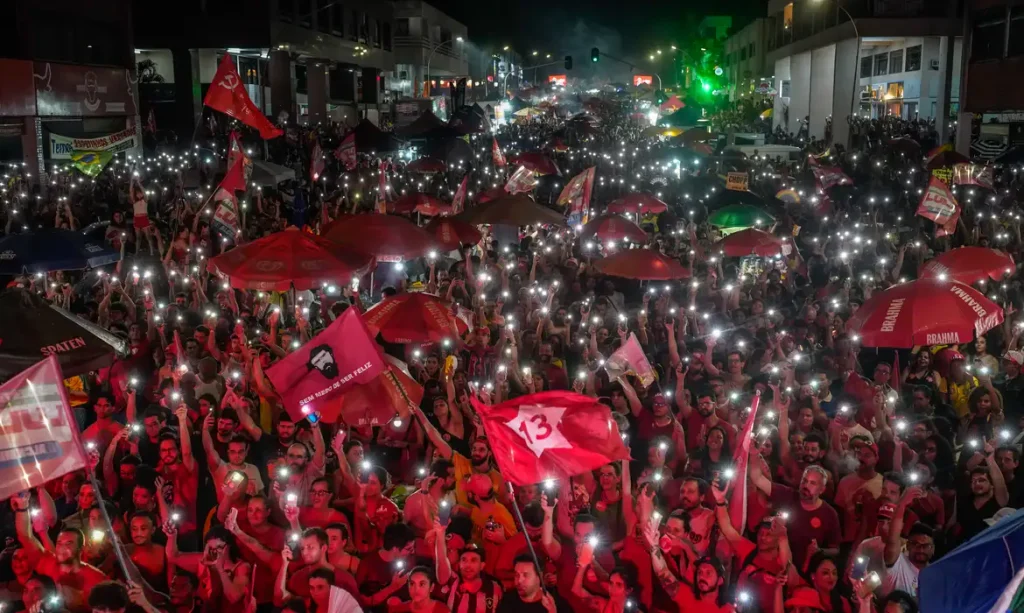
What happened between the two rounds was more than marketing. It was a social phenomenon that might be called, with a touch of humour, a “healthy collective frenzy”: once millions of Brazilians understood what was at stake — democracy, institutions, sovereignty and the country’s future — fear turned into hyper-engagement.
People who had never recorded a video in their lives began creating Reels, TikToks and WhatsApp statuses. Every phone became a small newsroom, studio and distribution hub. A true seedbed of networks emerged, as collective curation turned campaign content into conversations inside family groups, workplace chats and voice notes forwarded from hand to hand.
Lula also changed his tone. Instead of appearing only in institutional formats, he began communicating more directly through selfie-style videos, voice messages to supporters and calls for collective action — less ceremony, more proximity.
When the Platform Becomes Part of the Contest
The election also exposed something uncomfortable: the power private platforms hold over public debate.
Lula’s campaign took allegations of unequal content distribution by Meta — the company behind Instagram, Facebook and WhatsApp — to Brazil’s Superior Electoral Court (TSE). The court ordered Meta not to artificially reduce the reach of political content, not to exclude posts from recommendations, not to restrict searches and not to favour either campaign through Meta AI, under a daily fine of R$500,000.
The campaign said an Instagram video by Lula had its paid promotion blocked for nearly 24 hours, with an estimated loss of 1.3 million views. Tests presented to the TSE suggested that Meta AI refused requests to create materials linked to Lula while allowing pieces favourable to Flávio Bolsonaro. Meta denied political favouritism and attributed the problems to technical failures.
Whatever the legal outcome, the episode leaves an essential lesson: never build an entire strategy on ground controlled by someone else. When an algorithm is the bridge between you and your audience, someone else can charge a toll.
Geopolitics, Critical Minerals and Washington’s Shadow
The contest also had a geopolitical dimension. The Trump administration had publicly supported Jair Bolsonaro and criticised his conviction by Brazil’s Supreme Court, at one point linking 50% tariffs on Brazilian products to the judicial process.
Documents later revealed listed American conditions for tariff relief, including privileged access for US companies to Brazil’s critical minerals. Brazil holds about 23% of the world’s known rare-earth reserves, second only to China — a strategic asset in the global dispute over technology, energy and defence.
The narrative of sovereignty over natural resources, forests and critical minerals was not a rhetorical detail: it became part of the story that mobilised voters. The question was direct — who decides the fate of Brazil’s wealth: Brazil, or foreign interests?
Lessons for Communicators
The outcome of 2026 offers valuable lessons for professionals in communications, marketing and digital strategy:
- Owned assets matter: never build your entire community on someone else’s algorithm.
- Community beats paid reach: a message forwarded by a family member on WhatsApp carries a trust that no advertisement can buy.
- Authenticity beats excessive polish: smartphone aesthetics and human language outperform perfectly polished productions.
- Decentralisation is not loss of control: guiding a network with clear missions generates traction and scale.
- Do not feed disinformation: sometimes the smartest response to noise is to stop giving it fuel.
What Remains
This was not a “collective frenzy” in the negative sense. It was something more interesting: a collective awareness that the contest was not happening only at the ballot box, but also in feeds, family groups, forwarded voice notes and everyday conversations.
Brazil showed that a content strategy can be more than marketing. It can be a defence of democracy, an exercise in sovereignty and — above all — a way to return narrative power to the people.
For content creators, that may be 2026’s greatest legacy: the most powerful message is not the one that shouts loudest inside the algorithm — it is the one that travels from hand to hand because someone decided it mattered.